

Business
Exploring Why We Implement the Agile Manifesto into All the Work that We Do.

Phil Collins
2 min read
For those who may not be aware of the work that we do here at Initforthe, we are a software design, development, and consultancy company that adheres strictly to the Agile Manifesto and its 12 key principles. In today's article, we are going to share exactly why we adhere to the Agile Manifesto and its 12 principles, as well as share the benefits we have found from doing so. Without further ado, let’s get straight into it.
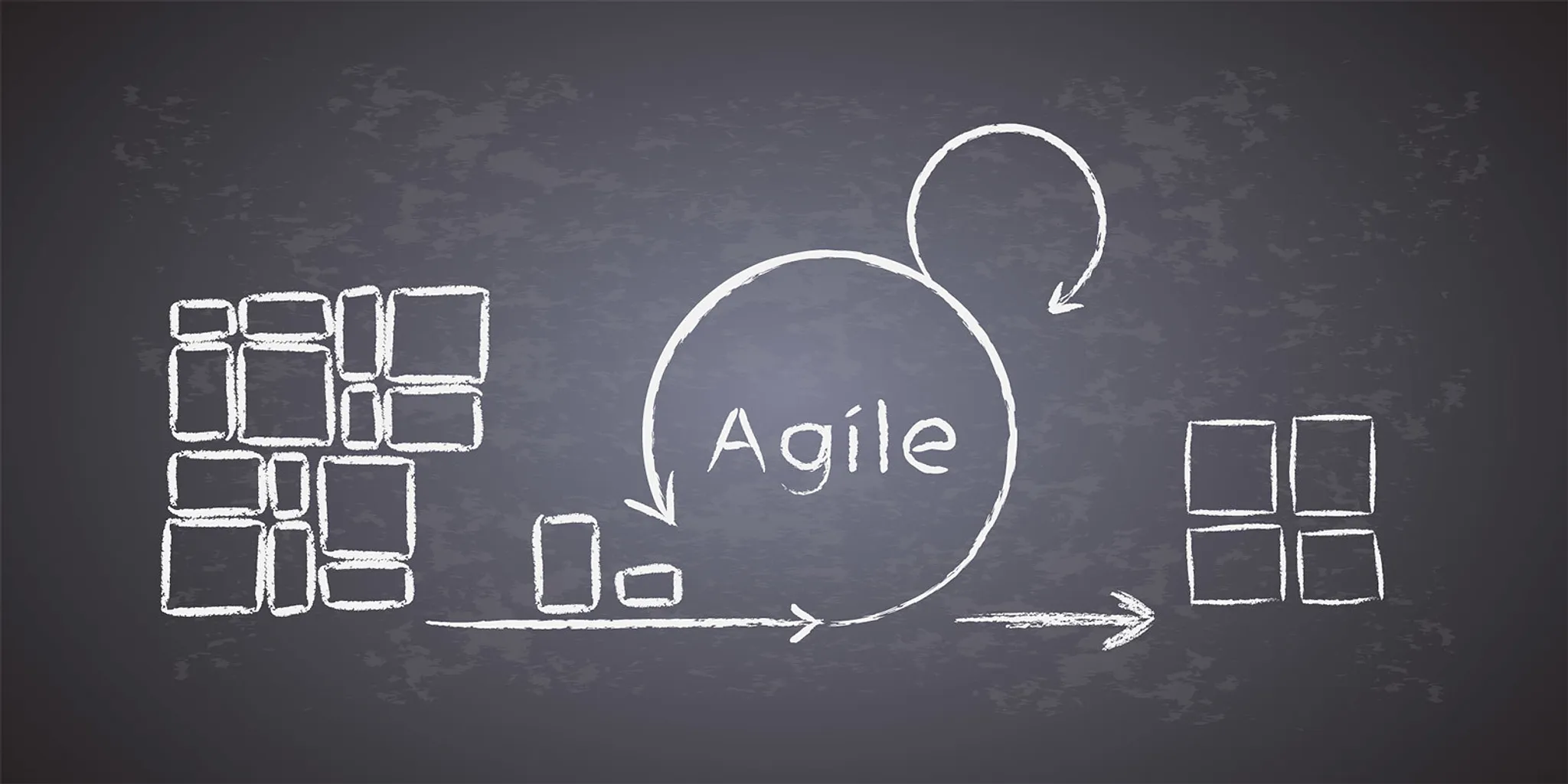
To put it simply, we implement the Agile Manifesto into all the work we do because we believe that it is the path to any project's success. It makes mapping out your business, identifying key values, and product planning a breeze. Agile serves to resolve all issues that you may find in your day-to-day business and ensures you deliver and realise value.
We have found that by adhering strictly to the Agile Manifesto, it is better for the users. Agile is all about the customers, meaning we are engaging with the right people from the get-go. As well as being beneficial for your customers, it is also beneficial for your business too. Essentially, our bespoke software solutions do 10 times the work without the need to hire anyone. Sounds too good to be true, right? Well, not when Initforthe are on the job.
Benefits of Agile
One of the biggest benefits of Agile and our services combined is the amount of free time you will now have. What will you do with all that free time?
Here at Initforthe, we believe that at least 80% of what you do can likely be automated to some degree. So, with all that in mind, what is not to love? It is not something that you are going to regret! In fact, some clients have reported saving up to £100,000 in salaries while our automated processes take over.
For more information about Agile and the other services that we have on offer here at Initforthe, please do not hesitate to get in touch with the team today.
How much capacity is your business leaving behind?
Use the calculator to estimate what slow processes, manual work and disconnected systems could really be costing you.
More posts.
View all
Tech
AI can write the code. Your business still needs an engineer
AI can now write a lot of the code we used to pay developers to write. That doesn’t make software engineering irrelevant. It makes the bit that was always more important much harder to ignore: understanding what should be built in the first place.
Vibe coding can turn your assumptions into working software incredibly quickly. But if the assumption is wrong, you’ve simply built the wrong thing faster. Good engineering starts before the app, CRM or automation. It starts by understanding how the business actually works, where people add judgement, and which parts of the process shouldn’t exist at all.

Tomislav Simnett
11 min read

Business
Four interruptions, two lost hours and the process your people shouldn’t be driving
Four interruptions can wipe nearly two hours from the useful part of a working day, and that’s before you count the interruption itself. Add long manual processes, routine human error, rework and stress, and you get a working environment where good people spend too much time recovering, correcting and chasing.
The answer isn’t to tell people to focus harder. It’s to design a better system, one that drives the process, preserves context, moves routine work automatically and only interrupts people when their judgement is genuinely needed.
Tomislav Simnett
10 min read

Business
The approval takes five minutes. The waiting costs far more.
A five-minute approval can leave work waiting for days. Once a quote, purchase, job or invoice misses its slot, the delay spreads into the rest of the process.
People switch tasks, schedules move, customers wait and cash arrives later. The decision itself may be quick, but the queue around it can cost far more than anyone realises.
Tomislav Simnett
9 min read