

Business
Why Happy Teams Win: The Hidden Drivers of Business Performance.


2 min read
We talk a lot about productivity, performance, and profit. But behind all the numbers are people. Real people, showing up each day, trying to do a good job. And whether they’re energised or running on empty makes more of a difference than we often realise.
The truth is, how people feel at work affects everything. It’s not just about being nice or boosting morale. It’s about outcomes—tangible, measurable ones.
The business case for happiness
It’s easy to think of happiness as a bonus, something that comes after the real work is done. But research tells a different story.
A UK study by Oxford University found that employees who felt happier were 13% more productive. Not because they worked longer hours. They simply got more done, with better focus and fewer mistakes.
Gallup’s analysis of over 100,000 teams showed that engaged employees deliver better results across the board:
- Higher productivity
- Fewer quality issues
- More profit
- Fewer sick days
And yet, in the UK, the majority of employees report being disengaged. That’s a huge untapped opportunity—and a growing risk.
What happens when we get it wrong
When people feel disconnected or under pressure, it doesn’t just impact their mood. It shows up in the numbers.
Stress and burnout are now among the top reasons for sickness absence in the UK. But more often than not, people don’t take time off. They carry on working—just not at their best. This is known as presenteeism, and it’s quietly costly.
Estimates suggest presenteeism costs UK employers around £4,000 per employee, per year. That’s a lot of lost potential, especially for smaller businesses.
What people want (and need)
Most people don’t want to coast. They want to care. But they need the right environment to do that.
The research is pretty consistent on this. What drives engagement and happiness at work?
- Feeling appreciated
- Doing work that has meaning
- Having space to grow and develop
It’s not about perks or quick wins. It’s about building a culture where people are trusted, supported, and able to contribute fully.
The role of technology
Let’s be honest—some work just isn’t that fulfilling. Repetitive tasks, admin overload, constant interruptions. It wears people down.
This is where technology can help. When used well, automation and AI can take care of the routine jobs, freeing up time and energy for the things people are actually good at—like solving problems, improving processes, or working with customers.
Technology should make work better, not just more efficient. It should support people, not replace them.
Where we’re heading
Over the next few articles, I’ll be digging into the evidence behind all of this. What really drives performance? How do stress, presenteeism and disengagement eat away at results? And what can businesses do, practically, to shift things?
Because the question isn’t whether you can afford to focus on employee happiness.
Because the question isn’t whether you can afford to focus on employee happiness.
It’s whether you can afford not to.
About Tomislav Simnett

Tomislav Simnett
Managing Director, Initforthe · Software & AI Consultant
Tomislav helps businesses work better through bespoke software development, AI consultancy, CRM systems and automation. He founded Initforthe in 2004 and believes technology should make work easier for the people using it.
How much capacity is your business leaving behind?
Use the calculator to estimate what slow processes, manual work and disconnected systems could really be costing you.
More posts.
View all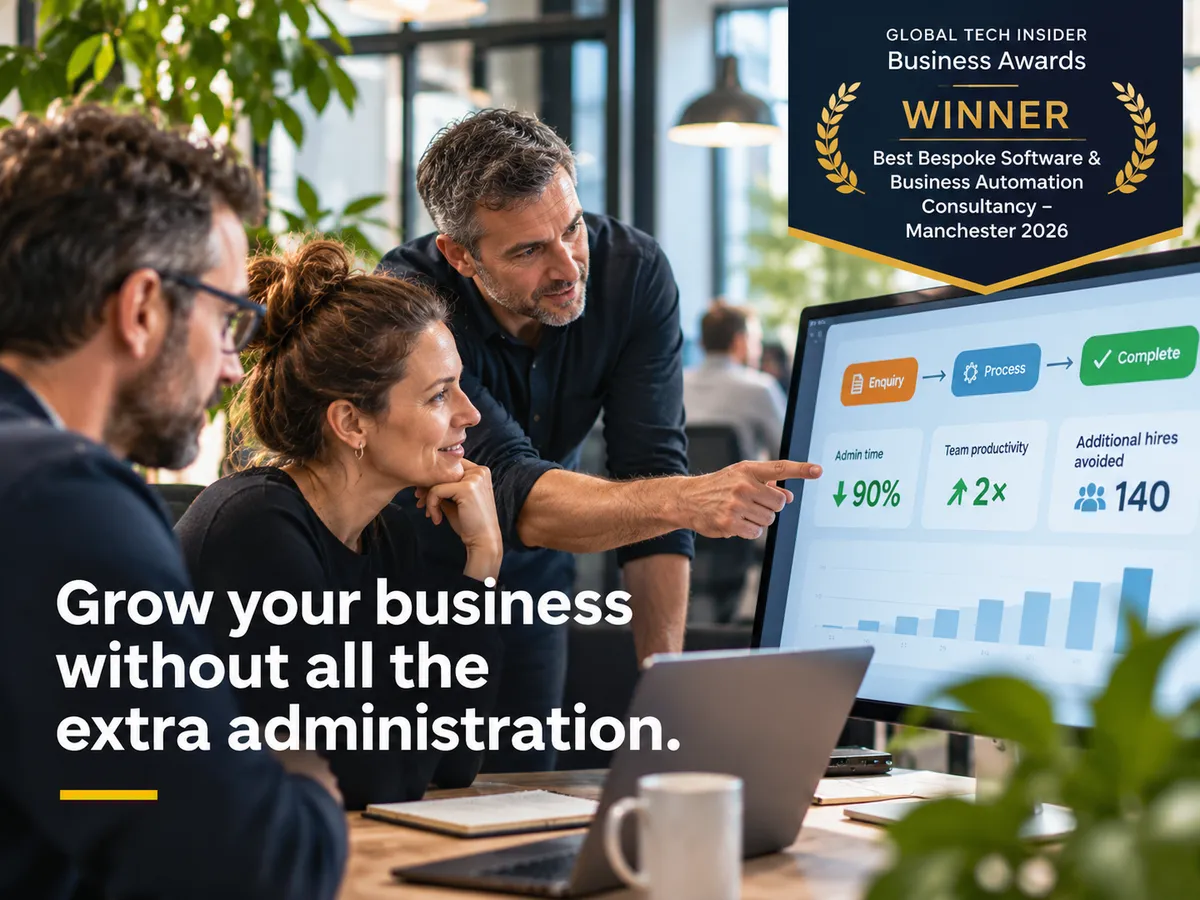
Business
What if your business could grow without all the extra administration?
We've been named Best Bespoke Software & Business Automation Consultancy – Manchester 2026 by Global Tech Insider. But the real story is what better systems can achieve: less administration, greater productivity and businesses able to grow without increasing their workforce at the same rate. One client estimates our work has saved them the need to employ 140 additional people, worth almost £10 million a year.
Tomislav Simnett
3 min read
Business
We've won a digital transformation award. Here's what really matters to us.
We've been named Digital Transformation Specialists of the Year 2026 – North West England. It's lovely recognition, but what matters more is the difference behind it: less paperwork, fewer frustrating processes and businesses able to grow without asking their people to work harder. That's what good technology should achieve.
Tomislav Simnett
4 min read

Business
Your Software Holds the Data. But Does It Know How Your Business Works?
Your software might hold all the data about your business, but does it actually know how your business works? In two recent conversations, I challenged business leaders to question something they'd always taken for granted: whether the work their people were doing needed a person to do it at all.
From unnecessary CRM administration to an entire department dependent on one employee's knowledge, both conversations revealed opportunities that went far beyond making existing tasks easier. What if our systems could understand how work happens, learn from our best people and eventually take responsibility for much of the routine work themselves?
Tomislav Simnett
8 min read