

Uncategorised
The customer isn't always right.
How we make sure you get what you really need.


3 min read
‘The customer is always right’. An age-old adage that I’m sure most of us have used as leverage at some point in our lives as consumers. And also may have been the diplomatic, lip biting recipient of as business owners.
For many years this was considered true. A motto regularly used by businesses and their staff to embrace their customers in a feeling of best practice, value and trust.
We’ve seen the B2C customer journey change dramatically over the past decade. Consumers engage in the sales process at a much later stage in the funnel, especially when it comes to highly informed purchases.
To a certain extent this works for business purchases too, but in our experience... customers almost always don’t know what they want!
At first read, we’ll admit that sounds somewhat blasé and could be considered a little arrogant. So let me explain my reasoning.
Most customers know what they want to end up with; they just don’t always know what's needed to get them where they want to be.
As bespoke software engineers, our role is to help them to understand what's involved in getting from where they are now, to where they want to be; in as cost-effective a manner as possible.
As bespoke software engineers, our role is to help them to understand what's involved in getting from where they are now, to where they want to be; in as cost-effective a manner as possible.
Theodore Levitt, the Harvard professor, famously said that "people don’t want to buy a quarter inch drill, they want quarter inch holes". They buy the drill bit (and perhaps the drill if they don’t already have one) in order to solve their problem. And it is the same for any purchase, whether it’s:
- Drill bits – I need a hole
- Cakes – I fancy a treat
- Websites – I want my target audience to find me online
- Lawnmowers – I'd like shorter grass
- Web apps – I need a more efficient business
For some of these, the process of getting there is very simply a retail transaction. For others, it is more complicated and requires time, effort and expertise to resolve.
For some businesses, a software purchasing decision is made purely on price. They want a solution and the one they are considering is the cheapest. Or it is, at least, the cheapest right now - over time this may not be the case and our role is to make the customer think about lifetime costs, about lifetime value and the overall return on investment.
So what are the steps the customer should take to understand their purchasing decision fully?
- The size of the current gap: what is the difference between where they are now and where they want to be? Generally, the bigger the gap, the bigger the investment required, but not always.
- The number of people involved: how many people are actually involved?
- Who are the stakeholders, the influencers, the customers and the deliverers? You may not be able to please everyone, but they must all understand the reasons for change and accept that change needs to happen.
- How many steps need to happen: what needs to happen? Do 3rd party applications need to be integrated into your software?
- How much time needs to be invested in the user experience (particularly for external facing issues).
- What is being moved – data? product? people? – and many more steps…
- What are the main priorities?
- What are the implications of NOT doing something?
- Can the project be done in stages? - often helpful to companies on a budget.
- What are the costs of each stage?
- Is there a budget for all stages, or just some?
The one big reason for taking customers through all of this is so that their expectations can be properly managed.
Whether they were referred or they simply found you independently, customers often only want one end result - the one that they want. And they are trusting you to help them get that end result and woe betide you if the end result isn’t what they expect.
We are in the business of getting our customers the solutions they need. After completing a business needs analysis, we can often find that what a customer wants and what they in fact need are two completely different things.
If you let them buy what they think they need, and it doesn’t deliver the desired end result, you know who they will blame – and it won’t be themselves!
About Tomislav Simnett

Tomislav Simnett
Managing Director, Initforthe · Software & AI Consultant
Tomislav helps businesses work better through bespoke software development, AI consultancy, CRM systems and automation. He founded Initforthe in 2004 and believes technology should make work easier for the people using it.
How much capacity is your business leaving behind?
Use the calculator to estimate what slow processes, manual work and disconnected systems could really be costing you.
More posts.
View all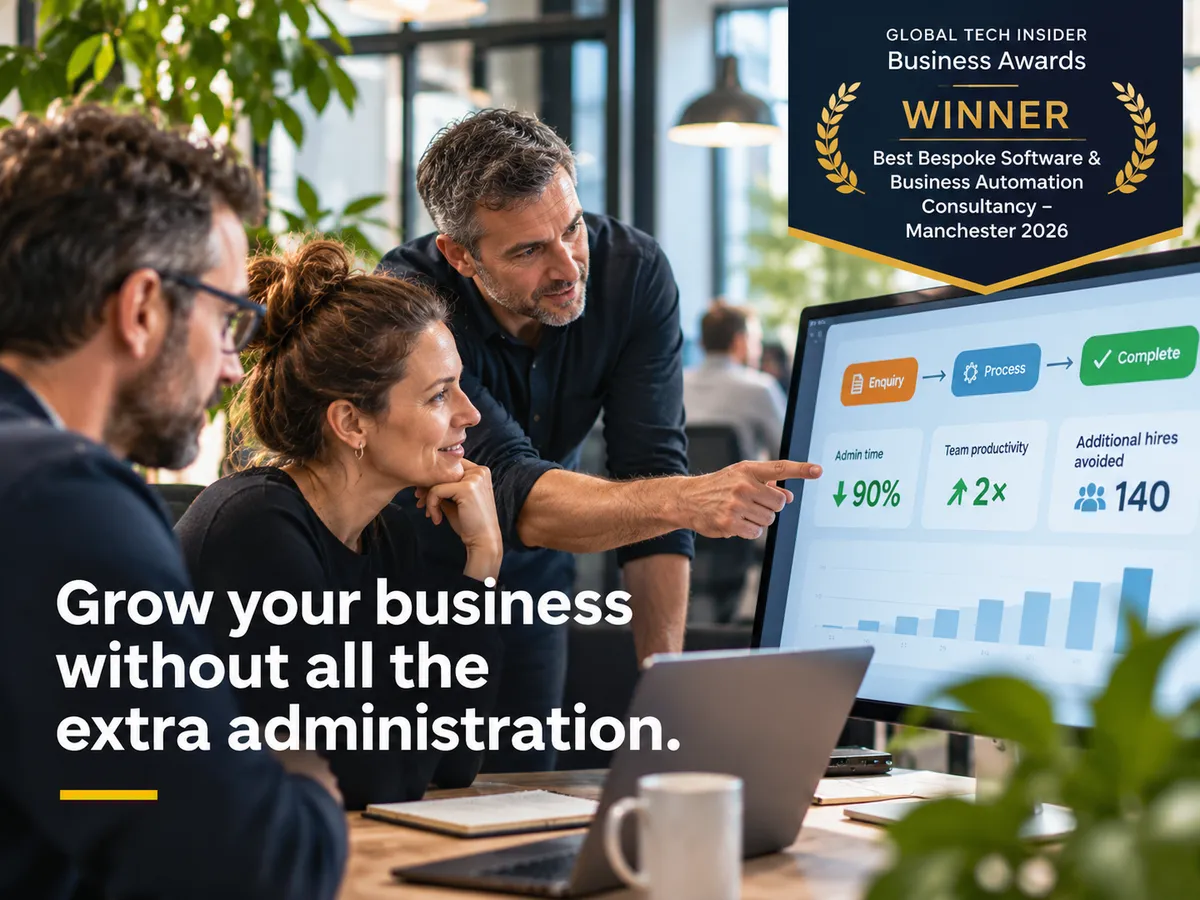
Business
What if your business could grow without all the extra administration?
We've been named Best Bespoke Software & Business Automation Consultancy – Manchester 2026 by Global Tech Insider. But the real story is what better systems can achieve: less administration, greater productivity and businesses able to grow without increasing their workforce at the same rate. One client estimates our work has saved them the need to employ 140 additional people, worth almost £10 million a year.
Tomislav Simnett
3 min read
Business
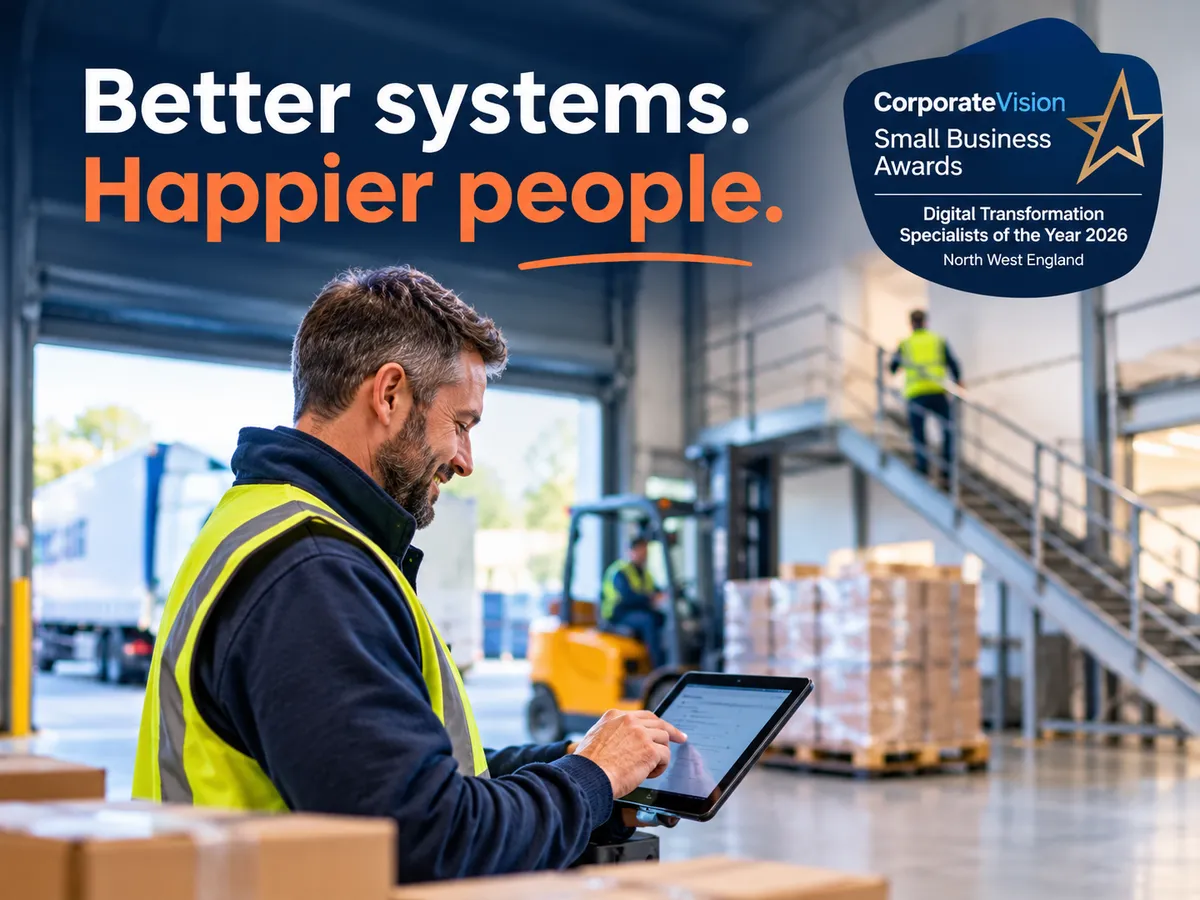
We've won a digital transformation award. Here's what really matters to us.
We've been named Digital Transformation Specialists of the Year 2026 – North West England. It's lovely recognition, but what matters more is the difference behind it: less paperwork, fewer frustrating processes and businesses able to grow without asking their people to work harder. That's what good technology should achieve.
Tomislav Simnett
4 min read

Business
Your Software Holds the Data. But Does It Know How Your Business Works?
Your software might hold all the data about your business, but does it actually know how your business works? In two recent conversations, I challenged business leaders to question something they'd always taken for granted: whether the work their people were doing needed a person to do it at all.
From unnecessary CRM administration to an entire department dependent on one employee's knowledge, both conversations revealed opportunities that went far beyond making existing tasks easier. What if our systems could understand how work happens, learn from our best people and eventually take responsibility for much of the routine work themselves?
Tomislav Simnett
8 min read