

Uncategorised
Quick Fixes = Quick Failures.
Why automation over time is the true path to success.


3 min read
Okay, let's be honest...
Most companies are going to try and be cheap and cut corners. 70% will rely on an off the shelf solution to put a plaster over their knife wound. Around 6 months later they will have fresh frustrations from a solution that has become more of a regret.
Failure can be hard and fast when automation is implemented as a quick fix, but used as a strategic approach in implementation over time saves your company big in time and money as well as vast benefits moving forward.
Simplification before automation
By Identifying and documenting your businesses current processes, you can pinpoint how to apply automation correctly and to its potential, at scale. This will clean up any redundant measures that might be slowing your organisation down, while identifying business areas that will benefit most from automation.
This optimise first, and automate later approach is crucial to ensure you address the right problems, rather than simply doing the wrong things, faster.
Modelling matters
It is critical to use modelling as a means of driving implementation. After all, it’s easier and cheaper to test and fix a model than to realise an implemented process isn’t working as intended.
Modelling allows you to simulate which tasks within a process meet a specified rate of return. You can then use this information to implement to other areas of your business. In short, models help you prioritise and guarantee the dependability of your final automated process.
Warriors in the workforce
It’s a common misconception that automation is implemented to replace human workers. In reality, digital workforces are best suited to work alongside real people because they augment human behaviours.
Having employees onboard with automation is vital to success. When implemented in the right way, automation can have a positive effect on the workplace, as employees are liberated from repetitive tasks to focus on more engaging work suited to their talents and interests. It’s important to stress that automation cannot replace creative thinking, strategic planning, long-term projects, product development or customer research.
Build internal support for automation by finding employees to champion the implementation among staff. While every staff member should be informed about the automation process, honing in on a handful of passionate individuals to share the benefits of automation will help avoid speculation and rumours about the intentions behind introducing such a solution.
The earlier this happens, the better! Capturing existing knowledge and insights from staff before implementing automation is of key importance within a business. If they’re informed, they’ll be more receptive to providing feedback, which will lead to a stronger foundation for automation.
Track and trace
Once the automation rollout is complete, it is crucial to monitor it. Any return on investment can only be proven by measuring results over time, so monitoring the results of your automation against its expected value is crucial to ensure value for money is being achieved.
Complacency is detrimental to automation, a neglectful attitude will quickly see your optimised processes fall out of date. Ongoing monitoring of your automation solution will also mean issues can be identified and resolved quickly, and the processes themselves can be continually refined. The best way to successfully scale your business is to start practicing a regular cycle of optimisation as you work towards increasing efficiency across a broader range of processes.
It is a long journey to achieve enterprise-level automation, but the benefits of implementing it properly far outweigh the short-term and unsustainable results you’ll see from a quick fix. Patience will lead to RPA longevity; you just have to learn to appreciate the process first.
About Tomislav Simnett

Tomislav Simnett
Managing Director, Initforthe · Software & AI Consultant
Tomislav helps businesses work better through bespoke software development, AI consultancy, CRM systems and automation. He founded Initforthe in 2004 and believes technology should make work easier for the people using it.
How much capacity is your business leaving behind?
Use the calculator to estimate what slow processes, manual work and disconnected systems could really be costing you.
More posts.
View all
Business
What if your business could grow without all the extra administration?
We've been named Best Bespoke Software & Business Automation Consultancy – Manchester 2026 by Global Tech Insider. But the real story is what better systems can achieve: less administration, greater productivity and businesses able to grow without increasing their workforce at the same rate. One client estimates our work has saved them the need to employ 140 additional people, worth almost £10 million a year.
Tomislav Simnett
3 min read
Business
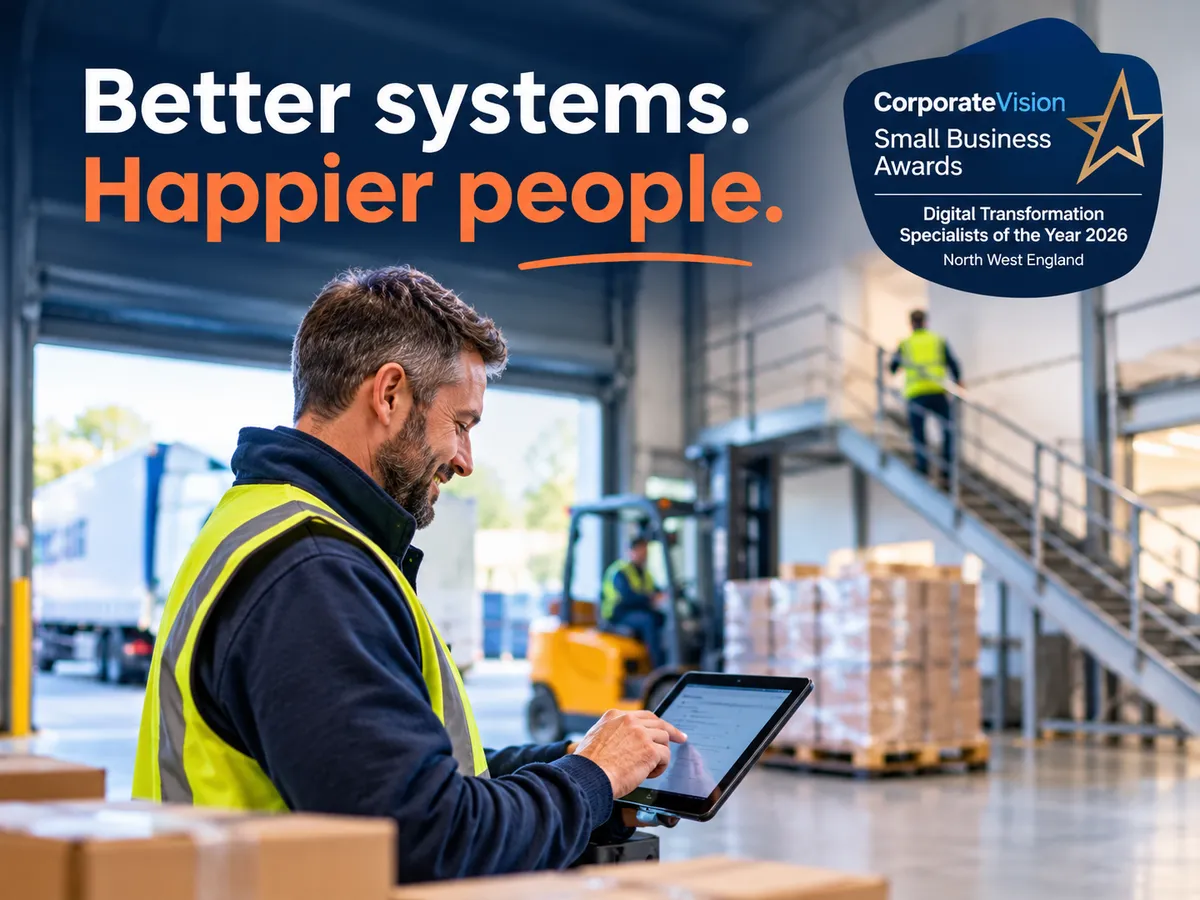
We've won a digital transformation award. Here's what really matters to us.
We've been named Digital Transformation Specialists of the Year 2026 – North West England. It's lovely recognition, but what matters more is the difference behind it: less paperwork, fewer frustrating processes and businesses able to grow without asking their people to work harder. That's what good technology should achieve.
Tomislav Simnett
4 min read

Business
Your Software Holds the Data. But Does It Know How Your Business Works?
Your software might hold all the data about your business, but does it actually know how your business works? In two recent conversations, I challenged business leaders to question something they'd always taken for granted: whether the work their people were doing needed a person to do it at all.
From unnecessary CRM administration to an entire department dependent on one employee's knowledge, both conversations revealed opportunities that went far beyond making existing tasks easier. What if our systems could understand how work happens, learn from our best people and eventually take responsibility for much of the routine work themselves?
Tomislav Simnett
8 min read