

Business
MoodBoard™: Because Vibes Are Data Too.

Tomislav Simnett
2 min read
At Initforthe, we're always looking for ways to combine people, technology, and a healthy dose of curiosity. Our latest innovation might raise a few eyebrows, but hear us out: what if your organisation could *sense* how your people are feeling before the tension reaches boiling point (or worse, the kettle queue)?
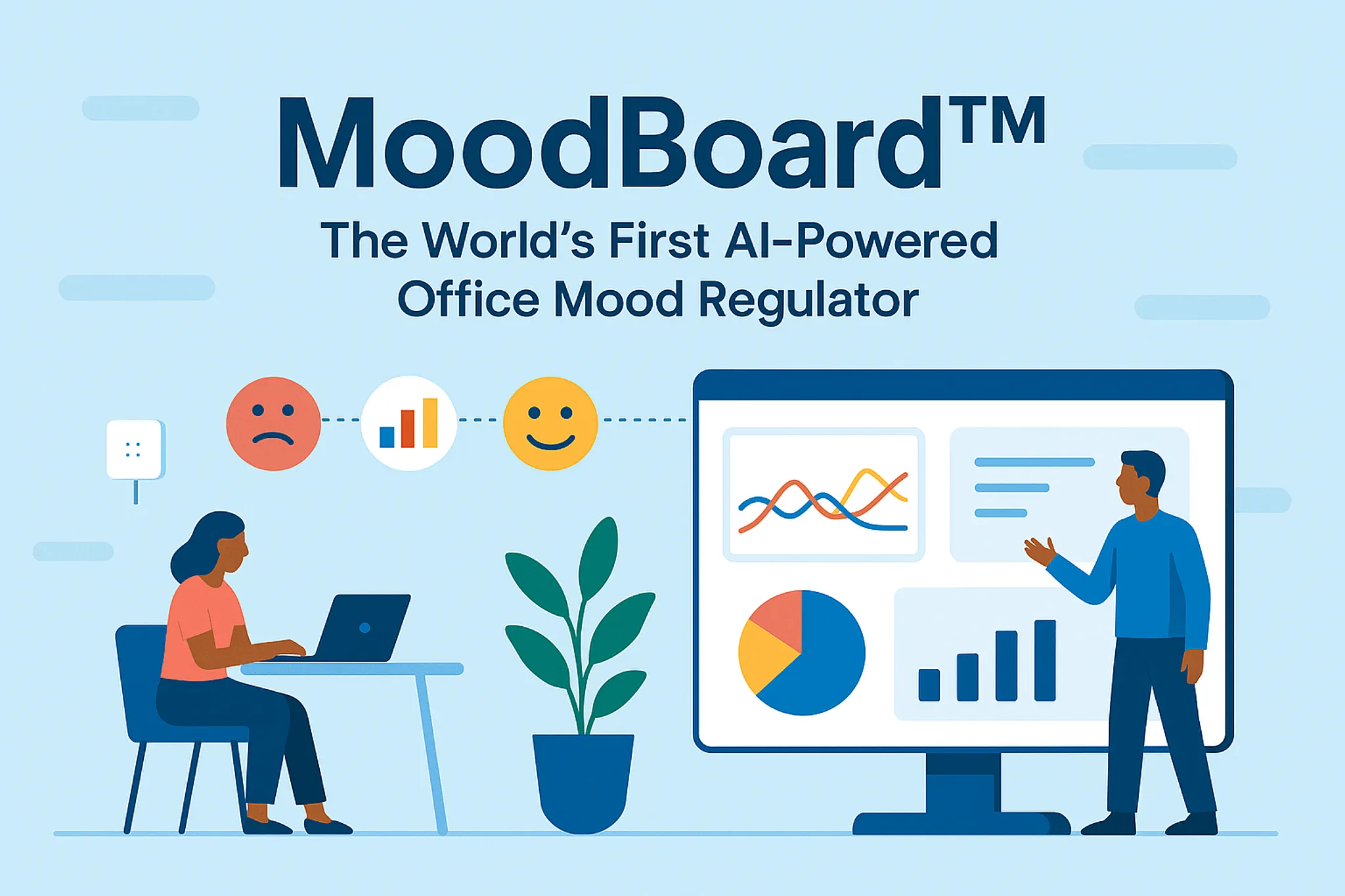
Introducing MoodBoard™, the world's first AI-powered office mood regulator.
It might sound like science fiction, but MoodBoard™ has been quietly trialled in select organisations over the last six months, and the results are quietly astonishing. By analysing subtle environmental and behavioural signals, MoodBoard™ builds a real-time emotional map of your team. Think of it as a weather forecast for workplace wellbeing.
Introducing MoodBoard™, the world's first AI-powered office mood regulator.
It might sound like science fiction, but MoodBoard™ has been quietly trialled in select organisations over the last six months, and the results are quietly astonishing. By analysing subtle environmental and behavioural signals, MoodBoard™ builds a real-time emotional map of your team. Think of it as a weather forecast for workplace wellbeing.
How does it work?
MoodBoard™ uses a blend of discreet sensors and machine learning algorithms to measure key indicators, including:
- Voice tone and pace during conversations
- Footfall rhythm (yes, the AI knows when you're pacing)
- Kettle and microwave usage patterns
- Temperature variations on desk surfaces
- The frequency of "I'm fine" said in a slightly higher pitch than usual
This data is then anonymised, aggregated, and displayed via a live dashboard that highlights emotional trends, energy dips, and potential flashpoints—before they happen.
Practical outcomes, real impact
In our pilot programme:
- One marketing team resolved a six-month feud after MoodBoard™ flagged a spike in biscuit hoarding and passive-aggressive Slack messages.
- A law firm noticed that replacing Monday meetings with walking catch-ups led to a measurable lift in the "Collective Mood Index."
- A Midlands-based call centre saw a 14% reduction in sick days after using MoodBoard™ to adjust their lighting and background music based on mid-morning lull patterns.
Why it matters
We’re all for culture statements and company values—but unless we can *feel* what’s really going on, we’re just guessing. MoodBoard™ gives leaders a quiet nudge when it’s time to listen, support, or simply crack open the emergency biscuit tin.
So, if you've ever wished your office came with a vibe-o-meter, we’ve got good news. It does now.
Currently in beta. Available to organisations who believe in people-first innovation (and aren’t afraid of a little emotional data).
So, if you've ever wished your office came with a vibe-o-meter, we’ve got good news. It does now.
Currently in beta. Available to organisations who believe in people-first innovation (and aren’t afraid of a little emotional data).
How much capacity is your business leaving behind?
Use the calculator to estimate what slow processes, manual work and disconnected systems could really be costing you.
More posts.
View all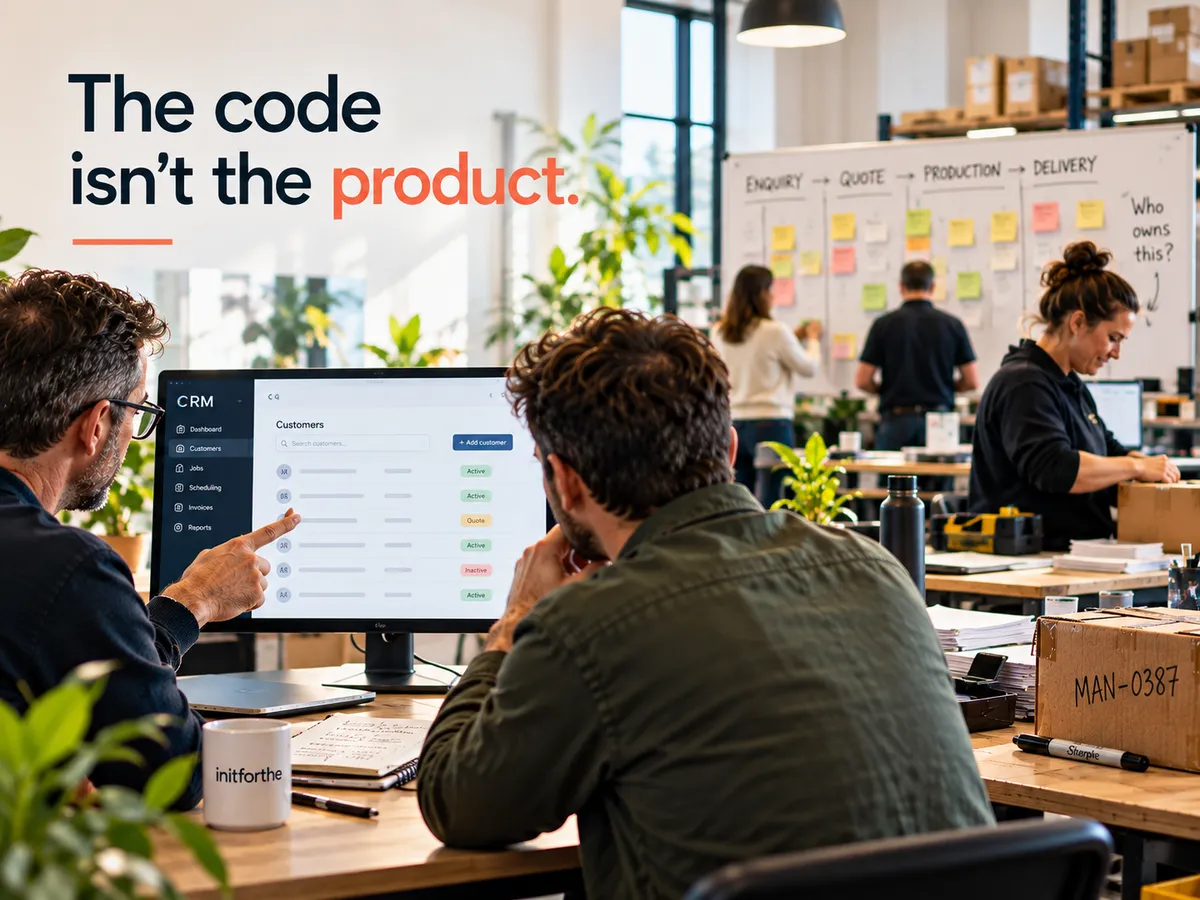
Tech
AI can write the code. Your business still needs an engineer
AI can now write a lot of the code we used to pay developers to write. That doesn’t make software engineering irrelevant. It makes the bit that was always more important much harder to ignore: understanding what should be built in the first place.
Vibe coding can turn your assumptions into working software incredibly quickly. But if the assumption is wrong, you’ve simply built the wrong thing faster. Good engineering starts before the app, CRM or automation. It starts by understanding how the business actually works, where people add judgement, and which parts of the process shouldn’t exist at all.
Tomislav Simnett
11 min read
Business
Four interruptions, two lost hours and the process your people shouldn’t be driving
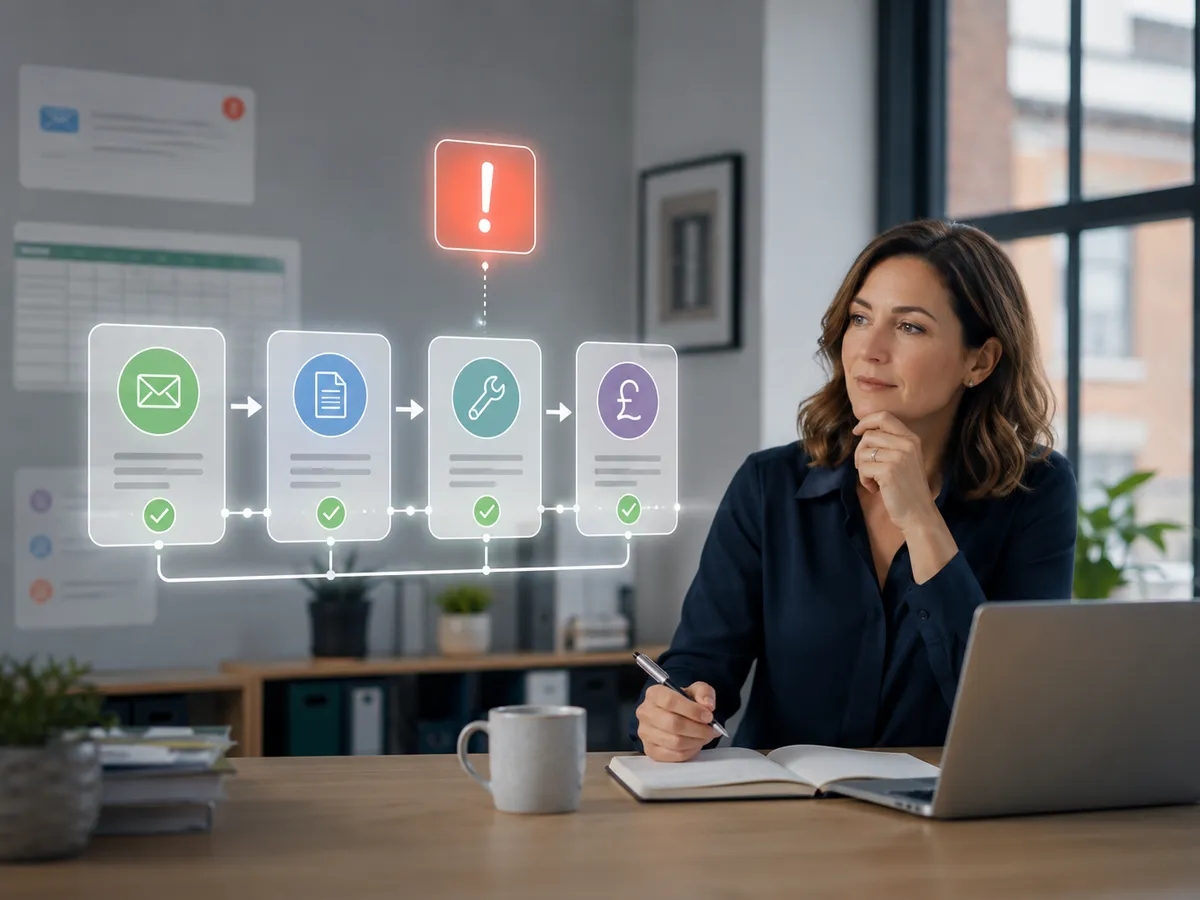
Four interruptions can wipe nearly two hours from the useful part of a working day, and that’s before you count the interruption itself. Add long manual processes, routine human error, rework and stress, and you get a working environment where good people spend too much time recovering, correcting and chasing.
The answer isn’t to tell people to focus harder. It’s to design a better system, one that drives the process, preserves context, moves routine work automatically and only interrupts people when their judgement is genuinely needed.
Tomislav Simnett
10 min read
Business
The approval takes five minutes. The waiting costs far more.
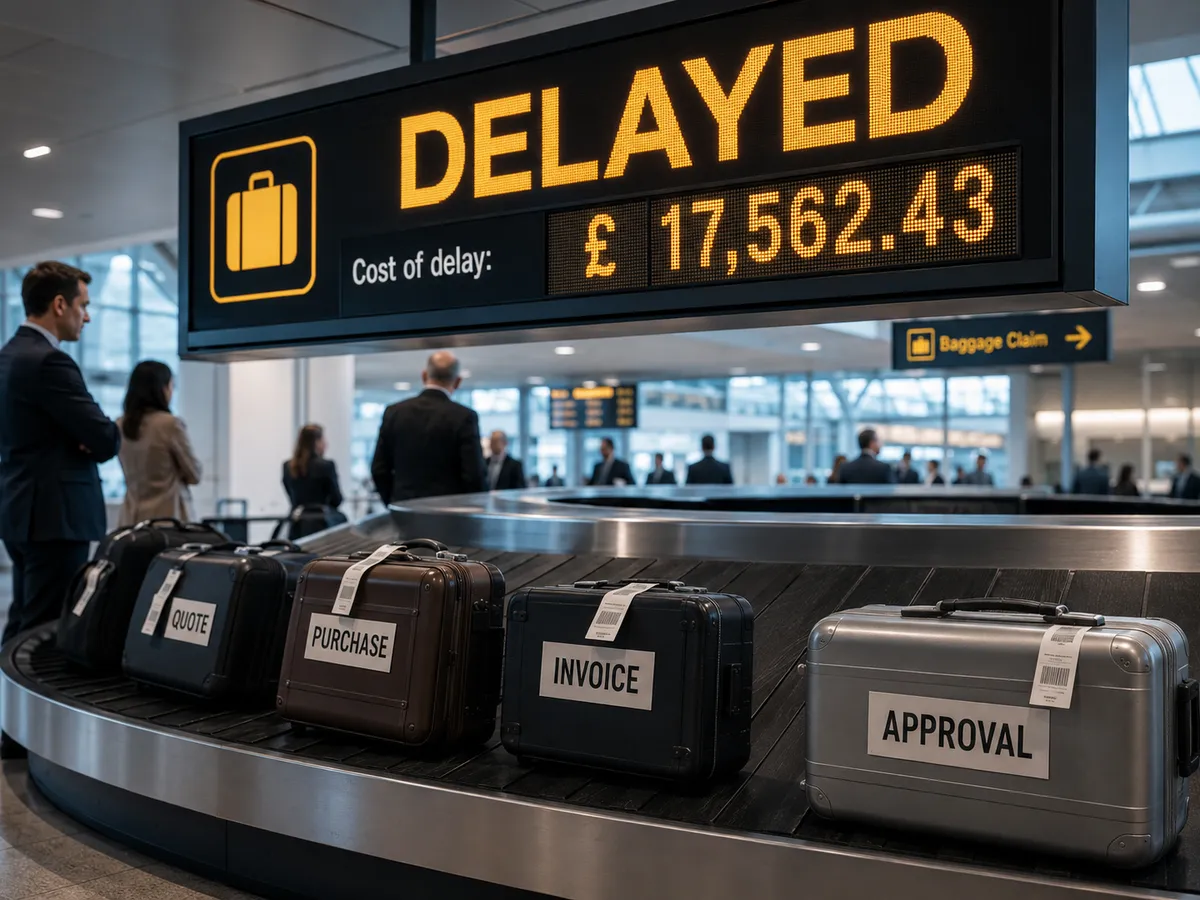
A five-minute approval can leave work waiting for days. Once a quote, purchase, job or invoice misses its slot, the delay spreads into the rest of the process.
People switch tasks, schedules move, customers wait and cash arrives later. The decision itself may be quick, but the queue around it can cost far more than anyone realises.
Tomislav Simnett
9 min read